What do we see if we attune our vision to waves rather than rays, diffraction – superimpositions of and interferences between images – rather than reflection? This seminar investigates the aesthetic and political shifts that occur when cinematic practices, old and new, privilege difference, errantry, momentum in their worldmaking activity. Here the term quantum expresses the attempt to move beyond the constraints of classical physics and see/think/feel in relation to indeterminacy and the world’s constitutive potential to be other than what it is. We will consider sci-fi and experimental films and readings in film-philosophy, new materialisms, and Afrofuturism, while also asking questions of truth, evidence, and historicity.
-
Seminar 1: The Wave and the Index
Mon, Oct 5, 20265:00 pm to 7:00 pm -
Seminar 2: Montage as Cinematography
Tue, Oct 6, 20265:00 pm to 7:00 pm -
Seminar 3: Theory Underwater
Wed, Oct 7, 20265:00 pm to 7:00 pm -
Public Lecture: Quantum Cinema: For a New Politics of Location
Thu, Oct 8, 20265:00 pm
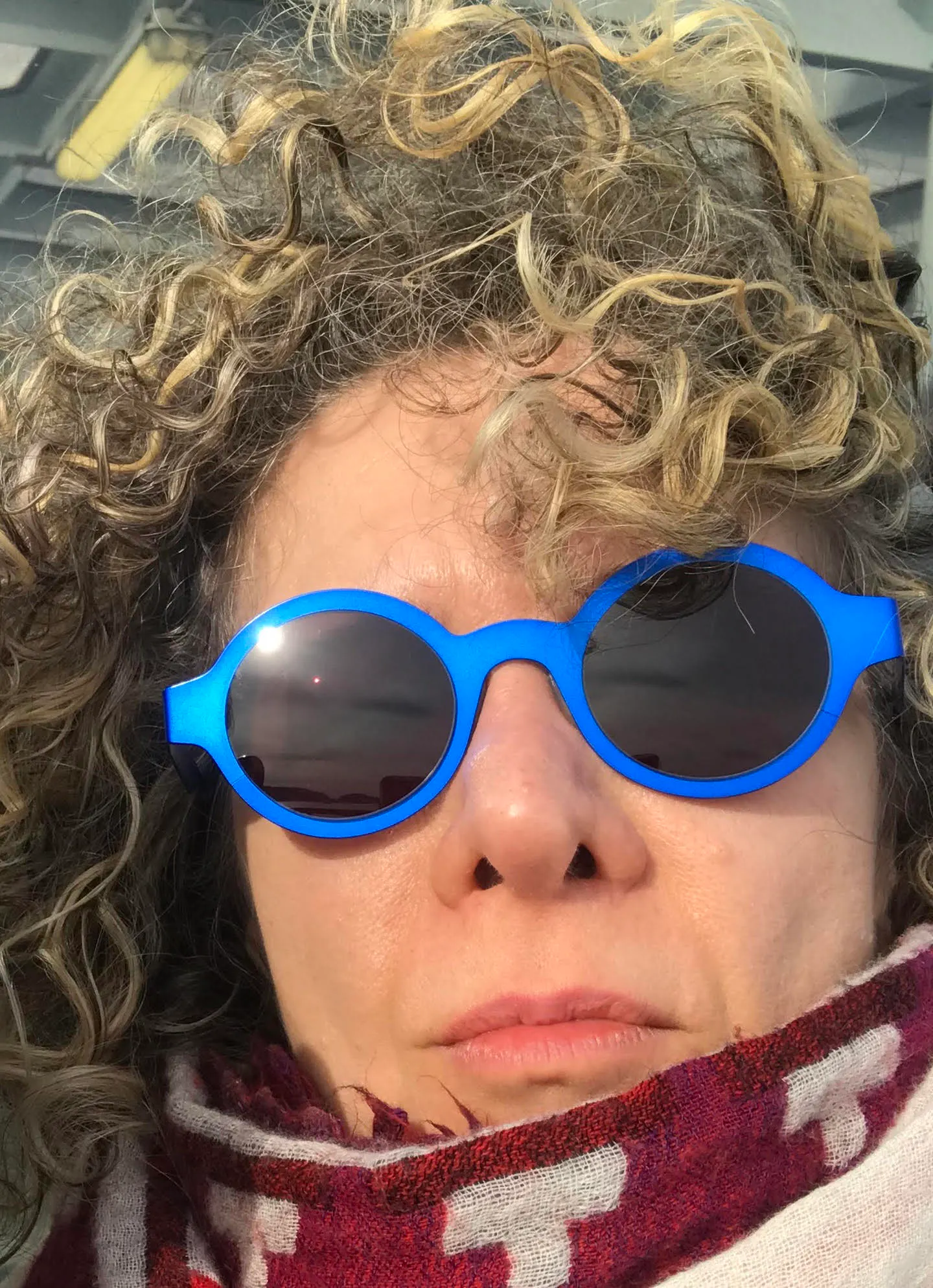
Domietta Torlasco is a critical theorist and filmmaker. In her transdisciplinary and transmedial practice, she investigates questions of memory and technology, life and labor, queer materialities, and cinema’s potential to reimagine histories and forms of life.
She is the author of four books: The Time of the Crime: Phenomenology, Psychoanalysis, Italian Film (Stanford University Press, 2008), The Heretical Archive: Digital Memory at the End of Film (University of Minnesota Press, 2013), The Rhythm of Images: Cinema Beyond Measure (University of Minnesota Press, 2021), and Futures of the Flesh: An Experiment in Film Writing (Northwestern University Press, 2026). Her film essays have appeared in online journals and screened at national and international venues, including the Kino Arsenal in Berlin, the Walker Art Center in Minneapolis, the Pacific Film Archive in Berkeley, and the Museum of Contemporary Art in Los Angeles.
Torlasco is core faculty in the Comparative Literary Studies Program at Northwestern and holds a courtesy appointment in the Department of Radio/Television/Film. She lives in Chicago and Berlin.
Karen Barad, “Troubling Time/s and Ecologies of Nothingness: Re-turning, Re-membering, and Facing the Incalculable,” New Formations 92 (2017): 56–86.
Karen Barad, “What Is the Measure of Nothingness? Infinity, Virtuality, Justice,” in Posthumanism in Art and Science: A Reader (New York: Columbia University Press, 2020).
View: Solaris (Andrei Tarkovsky, 1972, 166 min)
Sergei M. Eisenstein, “Montage and Architecture,” trans. by Michael Glenny. Assemblage, No. 10 (December 1989): 110-131.
Lakshmi Padmanabhan, ed., Forms of Errantry (New York: UnionDocs Editions, 2024).
View: This House (Miryam Charles, 2022, 75 min)
John Akomfrah, “Digitopia and the Specters of Diaspora,” Journal of Media Practice 11, no. 1 (2010): 21–29.
Domietta Torlasco, “Vertigo Sea: Suspension, Errantry, Flesh,” Liquid Blackness: Journal of Aesthetics and Black Studies, vol. 7, no. 2 (October 2023)
View: Theory Underwater (Domietta Torlasco, 2026, 19 min)