Calendar
Digital Fatigue Seminar with Homay King
Digital fatigue overwhelms us. Our resources are sapped by planned obsolescence, dual and triple authentication, the constant demand to prove one’s humanity, efforts to elude surveillance and tracking, and updating to remain the same (the title of a book by Wendy Chun). How have contemporary artists and critics addressed the condition of digital fatigue and overwhelm? What solutions have they proposed? In this seminar, we will look closely at works and texts that invite conversation about these questions.
Session 1
Read: Jonathan Crary, Chapter One of 24/7: Late Capitalism and the Ends of Sleep; and Homay King, “Christian Marclay’s Two Clocks” from Virtual Memory: Time-based Art and the Dream of Digitality.
Session 2
Read: Hito Steyerl, “In Free Fall: A Thought Experiment on Vertical Perspective” and “The Spam of the Earth: Withdrawal from Representation” from The Wretched of the Screen.
Session 3
Read: Édouard Glissant, “For Opacity” from The Poetics of Relation; and Zach Blas and Jacob Gaboury, “Biometrics and Opacity: A Conversation”.
Session 4
Lecture: Better Living in Eichlerville: California Modernism’s Influence on Apple
This talk studies a set of Californian suburban tract housing developments built by Joseph Eichler during the 1950s-1970s. Working with architects who had studied California Modernism with Richard Neutra and his circle, Eichler aimed to bring Bauhaus-inspired designs for modern living to middle-class Californians, concentrated in Silicon Valley along the San Francisco peninsula. His mass-produced, post-and-beam construction homes made with natural materials would soon become a recognizable hallmark of the California suburbs, featured in photography, films, and music videos. Eichler homes–with their flat, opaque, nearly windowless front facades and transparent glass backs–reversed the dominant model of suburban domestic architecture, which had been characterized by front-facing “picture windows.” Eichler’s tract housing shaped the design of personal computers that were being produced in the same place and time: Steve Jobs grew up in an Eichler look-alike and cited its influence on his aesthetic. Digital technology design, King argues, drew upon California Modernist principles of seamless minimalism, privacy and private property, and “indoor-outdoor living.” The talk also addresses Eichler’s public advocacy for open-access housing, which led to surprisingly diverse demographics in these neighborhoods at a time when many suburbs practiced legally enforced segregation. The presentation is derived from King’s book manuscript in progress, Go West: A Mythology of California’s Silicon Valley.
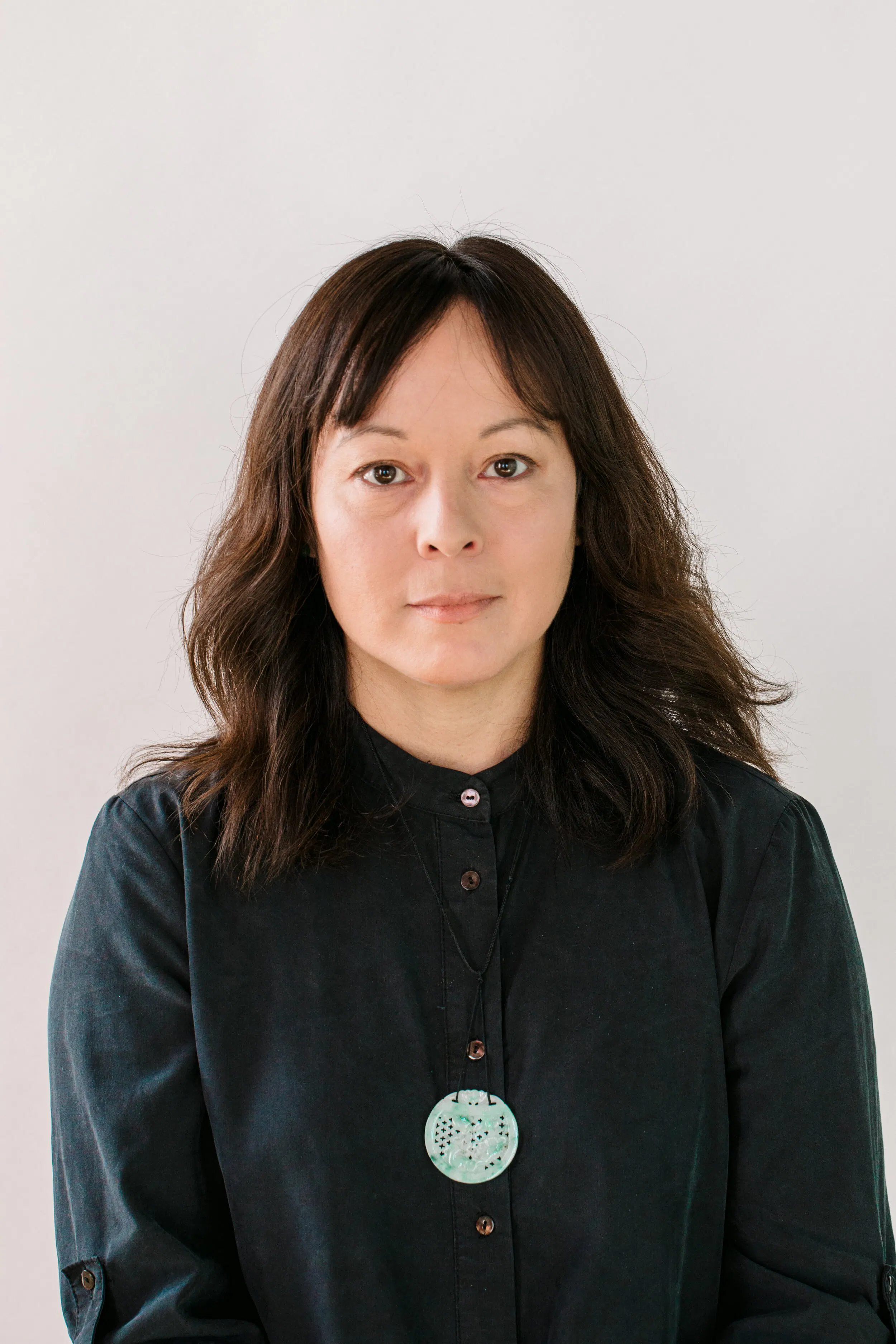
Homay King Biography
Homay King is Professor of History of Art at Bryn Mawr College. She is the author of two books: Lost in Translation: Orientalism, Cinema, and the Enigmatic Signifier and Virtual Memory: Time-based Art and the Dream of Digitality.
Her essays have appeared in Afterall, Discourse, Film Quarterly, October, and other publications including the catalogue for the Metropolitan Museum of Art’s China: Through the Looking Glass and The Films of Andy Warhol Catalogue Raisonné.
She is working on a book project entitled Go West: A Mythology of California’s Silicon Valley, for which she was awarded an Ailsa Mellon Bruce Visiting Senior Fellowship at the National Gallery of Art. She is a member of the Camera Obscura editorial collective.
Art + Research Center Fall 2026 Seminar: New Approaches to Cinema
The Art + Research Center Fall program launches a seminar series dedicated to new approaches to cinema dedicated to expanded, post-cinematic and cross-disciplinary approaches to cinema. This series responds to the expanded field of contemporary moving-image practice, where cinema increasingly intersects with digital media, immersive technologies, interdisciplinary research, and experimental exhibition formats. By examining the evolving contexts in which moving images are produced, circulated, and experienced, the series seeks to articulate a critical framework for cinema in the twenty-first century.
The seminar series is motivated by the recognition that contemporary cinema – across experimental, documentary, digital, and post-cinematic practices – demands new analytical and methodological approaches. Participants will explore cinema not only as a medium of storytelling, but as a site of research, material investigation, and sensory engagement. Emphasis is placed on cinema as both an artistic practice and a research methodology capable of generating new forms of critical and aesthetic inquiry across disciplines.
Through lectures, screenings, and seminar discussions with selected participants, invited speakers will examine the intersections of film, art, and media in relation to digital technologies, exhibition contexts, and the sensory and embodied experience of moving images. The Fall Art + Research Program Seminars and Lectures will take place virtually in the month of September or October.