The majority of images created today are not made for human eyes, and the moving image has acquired functions and modes of address that classical film theory was never built to describe or analyze. Spectatorship, indexicality, and the apparatus are transformed. Moving images train machine learning models, power computer vision algorithms, both generate and shape environments, and increasingly act in the world rather than only depict it. They circulate through assemblages of sensors, neural nets, datasets, and infrastructures whose logics often remain radically opaque to us. This requires a new conceptual, historical, and technical vocabulary.
The three sessions examine Harun Farocki’s operational image, the postwar prehistory of machine vision, and the world-horizons of generative AI. We move from images that act rather than represent, through the cybernetic apparatus that learned to model the world, to the inhuman intelligences that now generate, edit, and shape our perceptual worlds – in order to ask what cinema becomes when subject, referent, and frame are all displaced.
-
Seminar 1: The Operational Image
Tue, Oct 13, 20265:00 pm to 7:00 pm -
Seminar 2: Cybernetic Cinema, or the Prehistories of Machine Vision
Wed, Oct 14, 20265:00 pm to 7:00 pm -
Public Lecture: Inhuman Worlds: Pierre Huyghe's Liminal.
Thu, Oct 15, 20265:00 pm
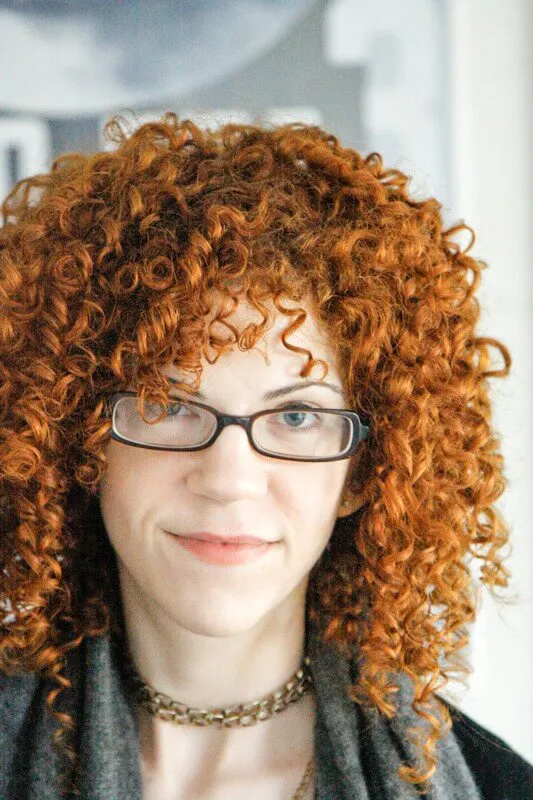
Zabet Patterson specializes in the intersection of contemporary art and computational media in the postwar period. Her work is shaped by psychoanalytic and post-structuralist theory, and her interests include contemporary art history and criticism, digital media history and theory, performance, and cybernetics.
Her first book, Peripheral Vision: Bell Labs, the S-C 4020, and the Origins of Computer Art, was published by MIT Press in 2015. Her work on computational media and art has appeared in journals including Grey Room, Animation and Media-N, and in anthologies including Experiments in Art and Technology (Salzburg: Museum der Moderne), Systems ed. Edward Shanken (Cambridge: Whitechapel Gallery/ MIT Press, 2015), Feminist and Queer Information Studies Reader, ed. Patrick Keilty and Rebecca Dean (Sacramento: Litwin Books: 2013), Mainframe Experimentalism, ed. Hannah Higgins and Douglas Kahn (Berkeley: UC Press, 2012), and Porn Studies, ed. Linda Williams. (Durham: Duke University Press, 2004).
Patterson has been supported by fellowships from the Townsend Humanities Center and the Josephine de Karman Foundation. She spent 2005-2006 as Visiting Assistant Professor in the departments of Art History and Art at Northwestern University. She has been invited to speak at symposia devoted to modern and contemporary art, digital media, visual culture and continental philosophy in Istanbul, London, Florence, Vancouver, Tokyo and across the United States, and has curated exhibitions on sound art and locative media. She was recently given an award from the Warhol Foundation / Arts Writers Grant Program in support of her forthcoming book, Metamorphose Yourselves: USCO, Techno-Utopia and Technocracy.
Harun Farocki, Eye/Machine I – III (2001-2003)
Hito Steyerl, How Not to Be Seen (2013)
Stan VanDerBeek & Ken Knowlton, Poem Field series (1964-67)
Charles Csuri & James Shaffer, Hummingbird (1967)
John Whitney, Catalog (1961) and Permutations (1968)
archival SAGE / Whirlwind operator footage